
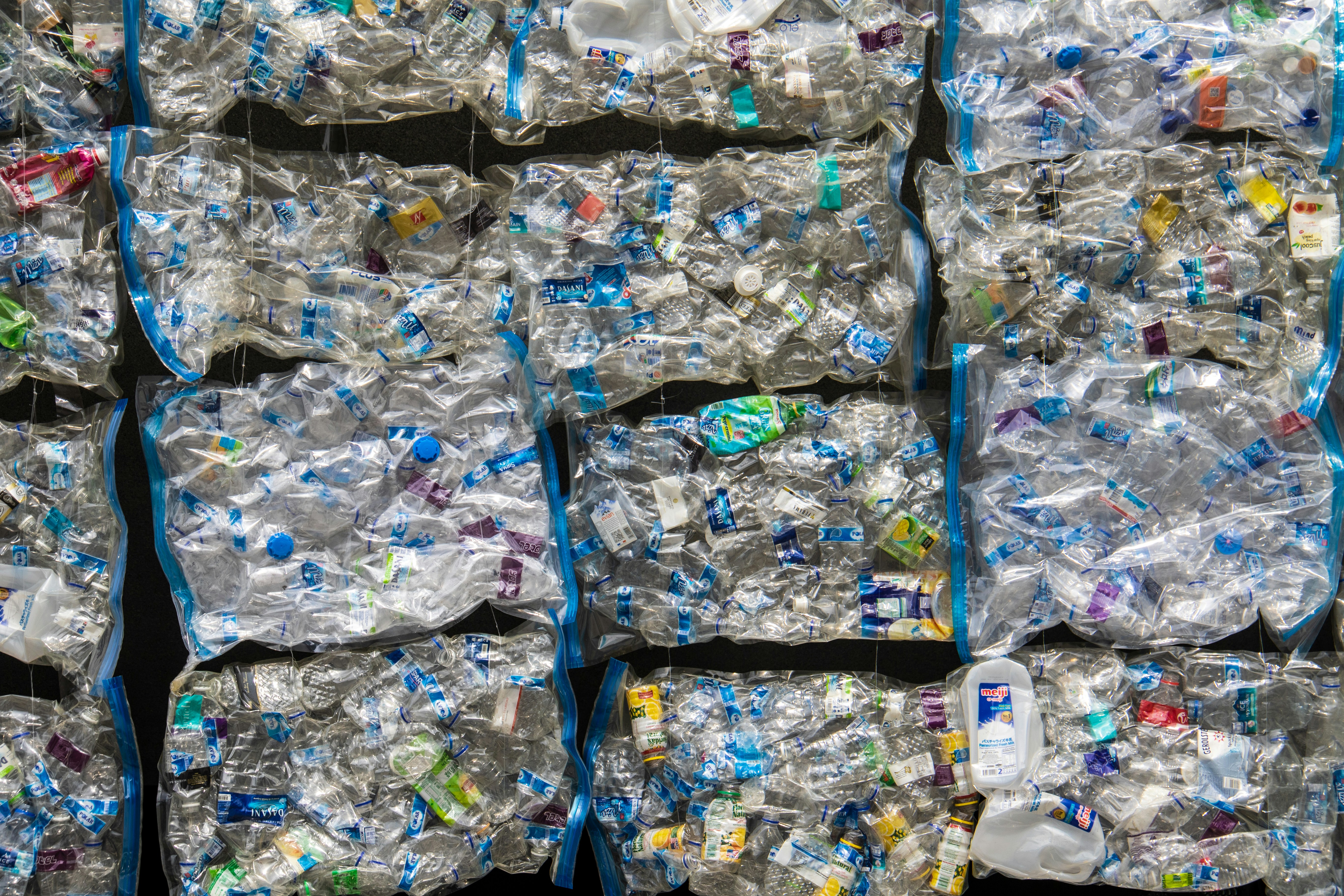
Plastics are often considered recyclable materials, but is this always the case? It can be confusing in the UK with different local authorities accepting different types of plastic for kerbside recycling. There’s always the option to collect plastics and take them to recycling drop off points, but can you be certain that they will be recycled? This blog post explores the topic in more detail so you can make informed choices about your plastic use.
Currently, in the UK, different local authorities accept different types of plastic at kerbside. Here in Hampshire, where the Final Straw Foundation is based, the options for plastic kerbside recycling are meagre, with only plastic bottles being accepted in household waste. However, as of next year (March 2026), kerbside recycling will be standardised across England as part of the governments’ Simpler Recycling in England scheme. This initiative will see separate recycling for food waste, dry recycling and residual waste, kerbside across the country. These reforms aim to standardise recycling practices across the country, reduce confusion, and improve recycling rates, which have plateaued at around 44–45% since 2015 .(GOV.UK)
As of March 2025, the new rules are already in place for businesses with more than 10 full time or equivalent employees, and businesses with fewer members of staff are expected to comply by March 2027. Dry recycling will include paper and card, plastic, and metal. However, it’s not yet entirely clear which plastics will be included.
According to the government website, plastics that will not be recyclable kerbside include compostable and biodegradable plastics; packaging that has contained white spirit, paint, engine oil or antifreeze; bulky plastics such as bins, toys and furniture; polystyrene; and PVC. Soft plastics or plastic films are also anticipated to be recyclable kerbside by March 2027, so may not be accepted when this scheme rolls out in 2026.

Until then, there are alternative options for recycling plastics that won’t be collected kerbside. Some local authorities have public collection points for plastics such as tubs and trays that can’t go in the household recycling bin. Many supermarkets also now offer a soft plastic recycling service.
However, soft plastics are very hard to recycle. So much so that, in 2024, the Environmental Investigation Agency discovered that 70% of soft plastics tracked from supermarket recycling schemes were incinerated rather than recycled. In fact, all plastics are much harder to recycle than alternative materials. Plastics can only be recycled a handful of times before they become too degraded for use. This is why we always promote the use of infinitely recyclable materials such as aluminium and glass, or reusable items, over plastics.
Key Changes Coming in 2026
1. Standardised Recycling Collections
All local authorities in England will be required to collect a consistent set of recyclable materials from households. This includes:
- Glass
- Metal
- Plastic
- Paper and card
- Food waste
- Garden waste (where applicable)
This move aims to end the “postcode lottery” of recycling services, ensuring that residents across England can recycle the same materials regardless of their local council.
2. Weekly Food Waste Collections
Most households will receive weekly food waste collections to reduce the amount of organic waste sent to landfills. Some councils may have transitional arrangements allowing for a later start date .
3. Separate Collection of Paper and Card
To reduce contamination and improve the quality of recycled materials, paper and card must be collected separately from other dry recyclables like glass, metal, and plastic. This change is based on evidence that mixing these materials can lead to higher contamination rates, reducing the effectiveness of recycling efforts.
4. Introduction of Plastic Film Collections by 2027
By 31 March 2027, kerbside collections for plastic films (such as plastic bags and wrapping) will be introduced for all households and businesses. This extension allows time for the necessary recycling infrastructure to be developed .
5. Simplified Bin Systems
The new system will standardise the number of bins to up to four per household:
- Residual (non-recyclable) waste
- Food and garden waste
- Paper and card
- Other recyclables (glass, metal, plastic)
This approach replaces the current varied systems, where some households have up to ten bins, aiming to simplify recycling and reduce confusion.
Additional Notes
- Business Compliance: Businesses and non-domestic premises are required to arrange for the collection of core recyclable waste streams by 31 March 2025. Micro-firms (with fewer than 10 full-time equivalent employees) have until 31 March 2027 to comply.
- Environmental Impact: The Simpler Recycling reforms are expected to contribute significantly to the UK’s environmental goals, including reducing greenhouse gas emissions and moving towards a circular economy.
These changes represent a concerted effort to make recycling more straightforward and effective across England. For specific information on how these changes will be implemented in your local area, it’s advisable to consult your local council’s website or contact their waste management services.
Sources:
- https://www.gov.uk/government/publications/simpler-recycling-in-england-policy-update/simpler-recycling-in-england-policy-update
- https://www.gov.uk/government/news/new-rules-simplifying-recycling-for-workplaces-in-england-come-into-force
- https://www.thetimes.com/uk/politics/article/four-bin-standard-to-end-wild-west-of-council-recycling-8lpr8ftph
- https://www.reconomyconnect.com/2025/03/18/simpler-recycling-legislation-the-timeline-for-england/
- https://www.circularonline.co.uk/news/simpler-recycling-comes-into-force/
- https://www.independent.co.uk/news/uk/home-news/recycling-england-bins-defra-b2725067.html

You must be logged in to post a comment.