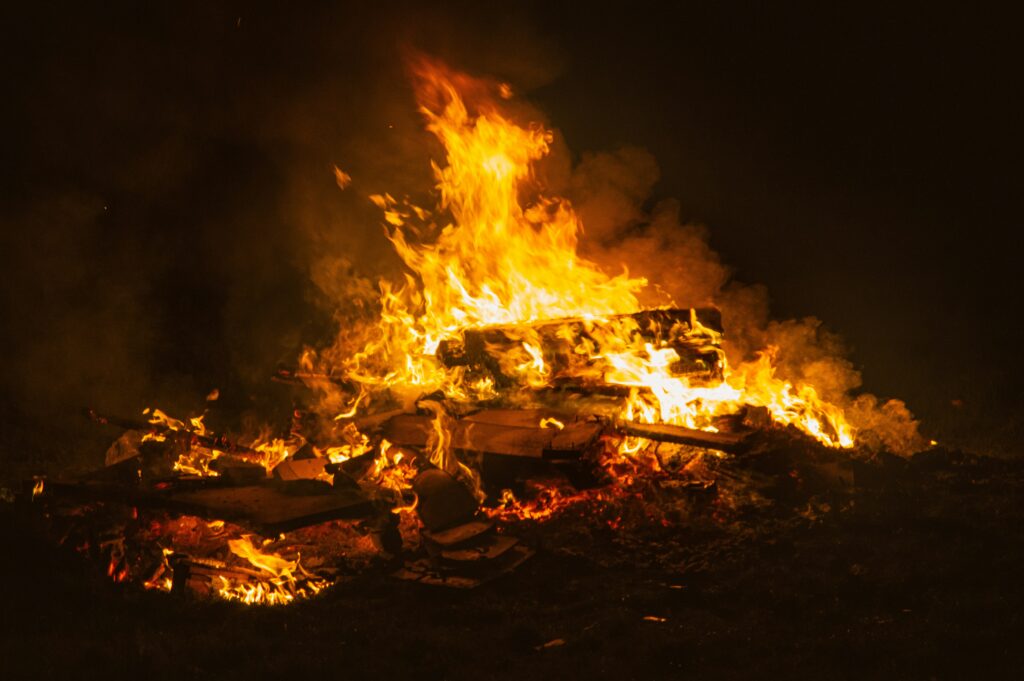
Are you getting ready to get wrapped up warm and watch fireworks or light a bonfire? Remember remember, it’s the 5th of November, gunpowder, treason and plot! But we must also remember to look after the planet whilst we celebrate. Let’s explore how we can reduce our environmental impact when celebrating Bonfire Night.
Celebrate together
We gather around a warming bonfire, hot chocolates in hand and sparklers at the ready… But fireworks and bonfires are polluters, there’s no getting around it. The University of Leeds found levels of soot particles in the air to be up to 100 times greater on Bonfire night than on other nights. How do we limit this? The best way is by attending a local or community firework display rather than putting on your own. This is a great way for the whole community to experience the oohs and ahhs of one firework display or bonfire, rather than multiple being lit from different households and limits the negative environmental impact. Light or drone shows are a great option if available in your area, with no direct emissions into the atmosphere.
Only burn what’s allowed
You should only burn dry, untreated and unpainted wood in a bonfire, and nothing else. The burning of rubbish, garden waste, food waste or clothes can have a negative effect not only on the environment but also on human health. Not only is a bad smell and thick black smoke a nuisance, it can also contain toxic chemicals and damage respiratory and cardiovascular health. If you’re unsure on what to burn on your bonfire, make sure you follow your local council’s guidance. We strongly advise leaving the bonfires to the professionals by attending a community event.
Check your fire!
Piles of garden waste and wood can make amazing homes for some of our precious wildlife. This is why it is crucial to thoroughly check any bonfire for wildlife before you light it, especially at the bottom in the centre, as this is where hedgehogs like to hide. Hedgehogs are classed as vulnerable to extinction in the UK, and their population has decreased a whopping 30% over the last 10 years.
To check for hedgehogs before holding a community bonfire event, you can:
- Check the entire pile: Hedgehogs often hide in the bottom two feet and centre of a bonfire.
- Use a torch: A torch can help you see and listen for hedgehogs.
- Listen for a hissing sound: Hedgehogs make a hissing sound when disturbed.
- Gently lift sections: Use a broom or pole to gently lift sections of the bonfire. Avoid using a spade or fork, as these can injure hedgehogs.
- Move slowly: Move slowly and calmly if there is a hedgehog present and if you need to handle it.
If you find a hedgehog, you can:
- Wear gardening gloves or use an old towel
- Gather the hedgehog and as much of its nest as possible
- Put it in a cardboard box lined with newspaper
- Place the box in a safe, quiet place
- Release the hedgehog under a bush, log pile, or behind a hedge
Here are some other tips to keep hedgehogs safe:
- Build your bonfire on the day you plan to light it.
- Place the bonfire on open ground, not on leaves or near long grass.
- If you can’t build the bonfire on the day, put chicken wire around the bottom to prevent hedgehogs from getting in.
- Light the bonfire from one side, and make sure everyone is away from the unlit side.
The best thing you can do to give them a safe home is never light a fire in your garden, but we hope that these tips can help you celebrate bonfire night a little more safely for our prickled neighbours. There is more useful information available here: https://www.hedgehogstreet.org/bonfire-night-hedgehog-safety/
Check out this adorable video taken by the neighbour of one of our team – what a very busy hog!
Be responsible with fireworks
Fireworks can be exciting and stunning to look at, however the loud sounds from fireworks can cause stress and anxiety in humans, especially in children, the elderly, and individuals with PTSD or sensory sensitivities. For wildlife, these noises can be even more distressing, as they disrupt communication, interfere with natural behavior, and sometimes lead to animals abandoning their habitats. Fireworks can scare animals, causing them to panic, flee, or become disoriented. Birds, in particular, are vulnerable, as sudden noises and bright lights can cause them to fly erratically, sometimes resulting in injury or death. Pets also suffer stress and anxiety from loud noises, which can lead to behavioral changes or physical harm.
If you decide that you must light fireworks, we strongly recommend doing this away from aquatic or marine environments, where debris is hard to retrieve and can cause environmental damage through the resulting chemical and plastic pollution. Always light fireworks away from wildlife and ensure all debris is collected and disposed of properly after use. If you must buy fireworks, look for quieter and more eco-friendly versions online.
How about a new tradition on the 6th of November, where you litter pick in your local area, picking up firework waste? If you’re unsure how to dispose of fireworks correctly, there is guidance here.
Sky lanterns
While banned in Wales, sky lanterns are sadly still legal to release in England, despite lobbying by charities and wildlife lovers. While they may look beautiful for 10 minutes, their impact is most definitely not lovely. Not only do the remnants of the lantern pose a threat to wildlife, with the possibility of creatures accidentally eating or getting caught in the litter, sky lanterns pose a huge fire risk. If they come into contact with dry grass, animal bedding, thatched roofs, or leaf litter, they have the potential to start extremely damaging and potentially dangerous fires. Moreover, the wire used in the lanterns can pose a threat to livestock. If a lantern comes down on a field growing animal feed, the wire has the potential to be accidentally mixed in with the vegetation, chopped up during processing, and served to livestock, potentially injuring them. Find out more about the impact of sky lanterns on the RSPCA website here: https://www.rspca.org.uk/adviceandwelfare/litter/skylanterns#
The 5th of November is a wonderful opportunity to come together as communities, and if we are thoughtful and plan we can make sure we also respect the planet and keep our wildlife safe. We hope you can go into the festivities with more confidence that you’re doing your bit to protect your local environment and wildlife.